Today is my birthday.
It’s also the third year in a row that my mom, because of Alzheimer’s, doesn’t know it’s the day she gave birth to me.
Someone I love asked, “How do I fix this?”
The answer is… you don’t.
Some things aren’t meant to be fixed. They’re meant to be witnessed.
As a life coach, I’ve learned that one of the healthiest things we can do is stop treating grief like a problem to solve. Grief is love looking for a place to land.
Today, I’m sad.
I’m also grateful that I still get to hold my mom’s hand.
Those emotions don’t compete. They coexist.
We often think strength means choosing gratitude over grief. But real emotional health allows us to hold both at the same time.
If someone you love is carrying a loss that can’t be fixed, resist the urge to find the perfect words. Instead, offer your presence.
“I see this hurts.”
“I’m here with you.”
“Your feelings make sense.”
Sometimes the greatest gift we can give another person isn’t an answer.
It’s permission to feel.
Today I’ll celebrate another year of life. I’ll grieve another year of loss. And I’ll be grateful for every moment I still have with my mom.
All three belong here. ❤️
Month: July 2026
When the Caregiver Becomes the Compass
Finding the Shore Through the Fog of Alzheimer’s
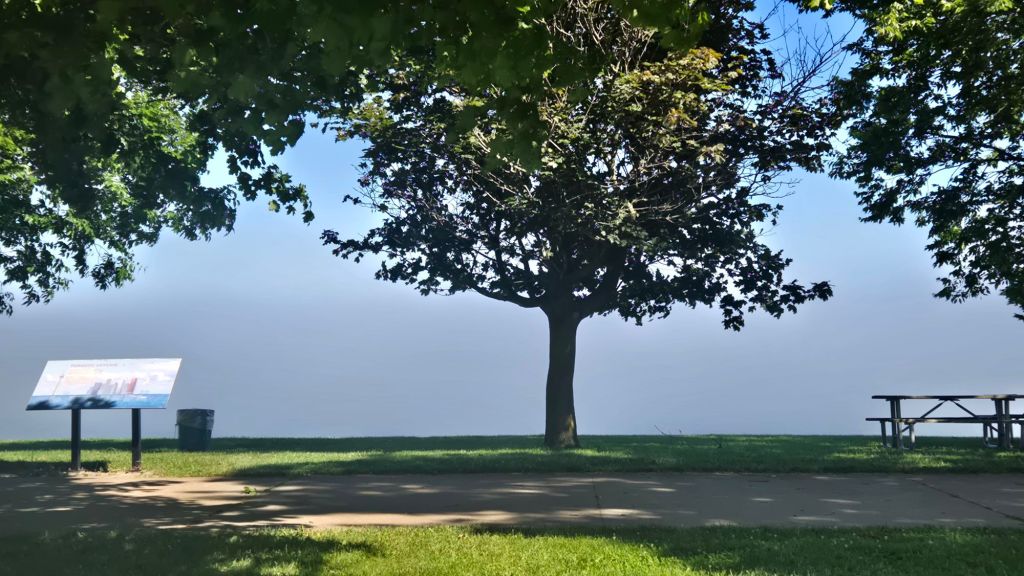
Standing at the water’s edge, I knew the lake was there.
I couldn’t see it. The fog had wrapped itself around the shoreline, blurring every familiar landmark. If someone had arrived for the first time that morning, they might have wondered if there was even a lake beyond the mist.
But I knew better.
I had seen it on clear days. I knew where the shoreline curved, where the water met the rocks, and how the sunlight danced across its surface. The fog had changed my view, but it hadn’t changed the truth.
That’s what caregiving for someone living with Alzheimer’s or dementia feels like.
The disease is the fog.
It rolls in quietly, hiding memories, routines, names, and places that once felt as permanent as the shoreline itself. To your loved one, the world can become unfamiliar and uncertain. But as caregivers, we remember what the fog has concealed.
We become their compass.
A compass doesn’t remove the fog. It simply points toward what is true.
When your loved one forgets which room is theres, you gently walk beside them.
When they can’t remember that breakfast comes after getting dressed, you lovingly guide her through the next step.
When yesterday disappears and tomorrow has no meaning, you become the steady voice that says, “We’re okay. This way.”
As a life coach, I’ve learned that so much of life is spent chasing perfect clarity. We tell ourselves we’ll feel confident once the fog lifts.
Caregiving teaches a different lesson.
Sometimes the greatest strength isn’t seeing farther.
It’s knowing enough to take the next faithful step.
This photograph reminds me that even when the lake is invisible, the path is still beneath our feet. The trees continue to grow. The bench waits patiently. Life hasn’t stopped because visibility has changed.
The same is true in caregiving.
Love becomes less about restoring what was and more about faithfully guiding what remains.
You become the keeper of routines. The holder of stories. The gentle reminder of home. The compass that points toward safety when someone else’s internal map no longer can.
One day, the fog will lift for all of us.
Until then, may we have the courage to walk slowly, speak gently, and trust that what love has built cannot be erased by what memory has lost.
Reflection
If you’re caring for someone with dementia today, remember this: You don’t have to clear the fog. You only have to keep pointing toward love. That’s what a compass does. It doesn’t change the weather. It simply helps someone find their way home. ❤️